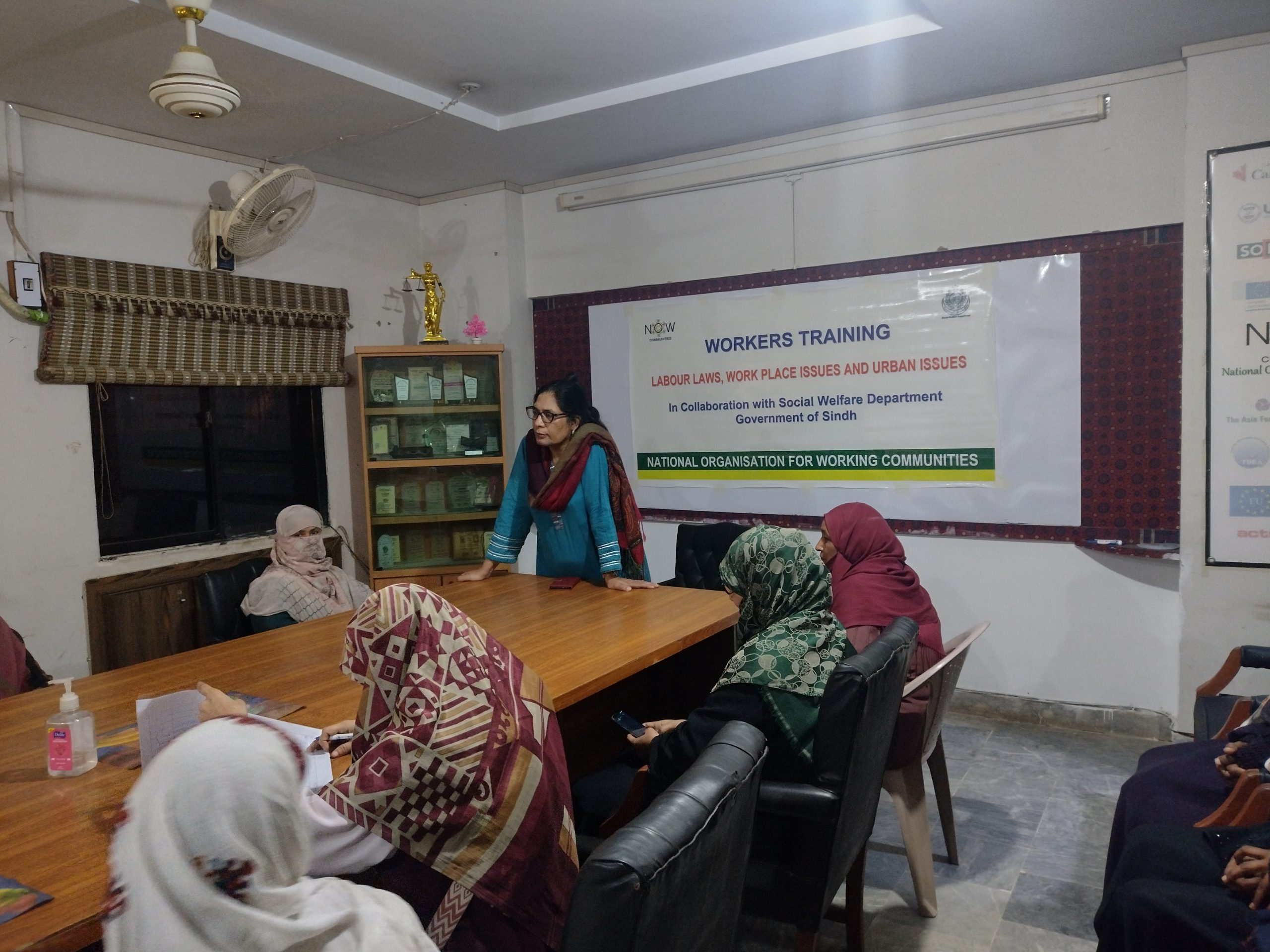
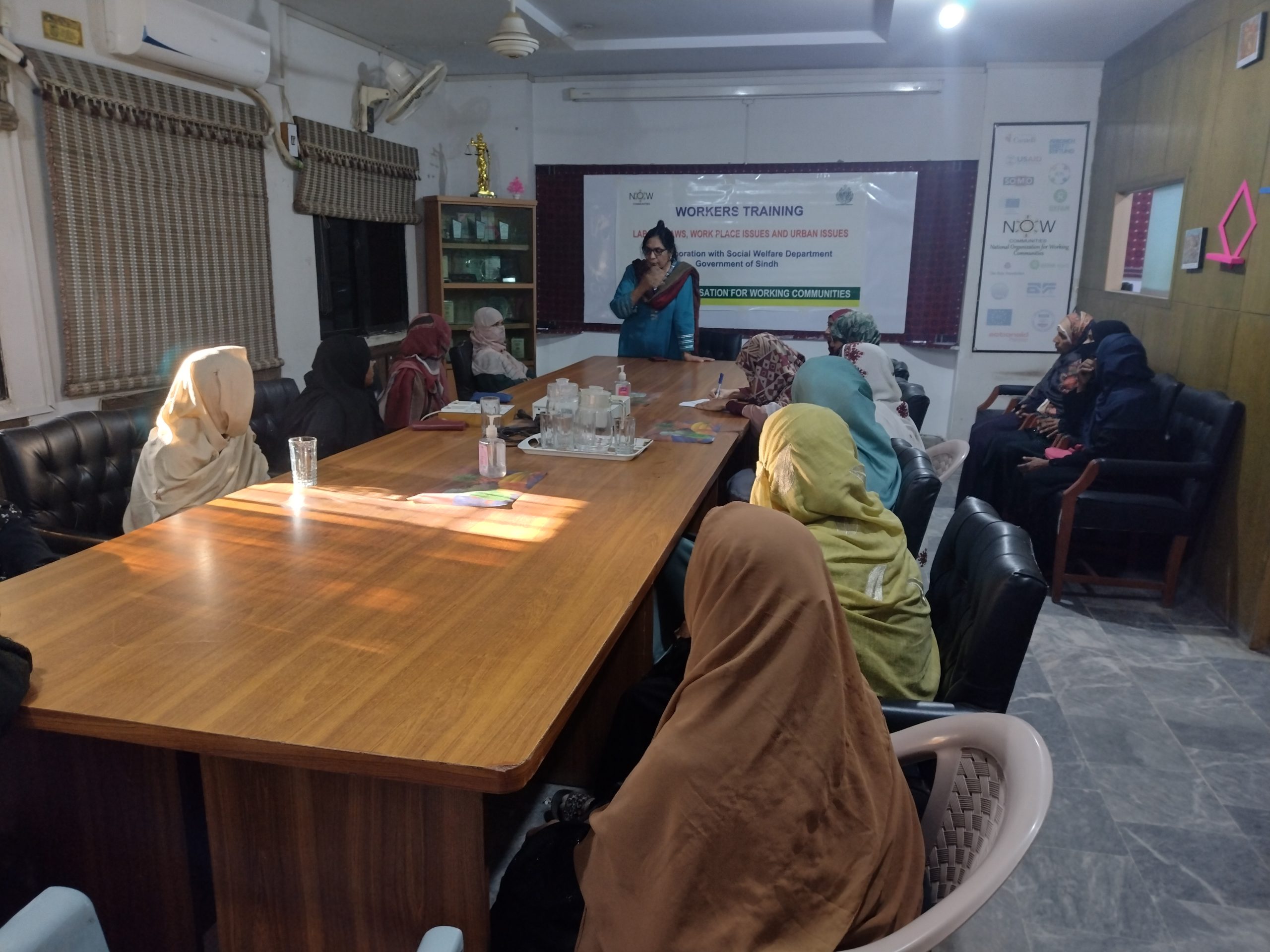
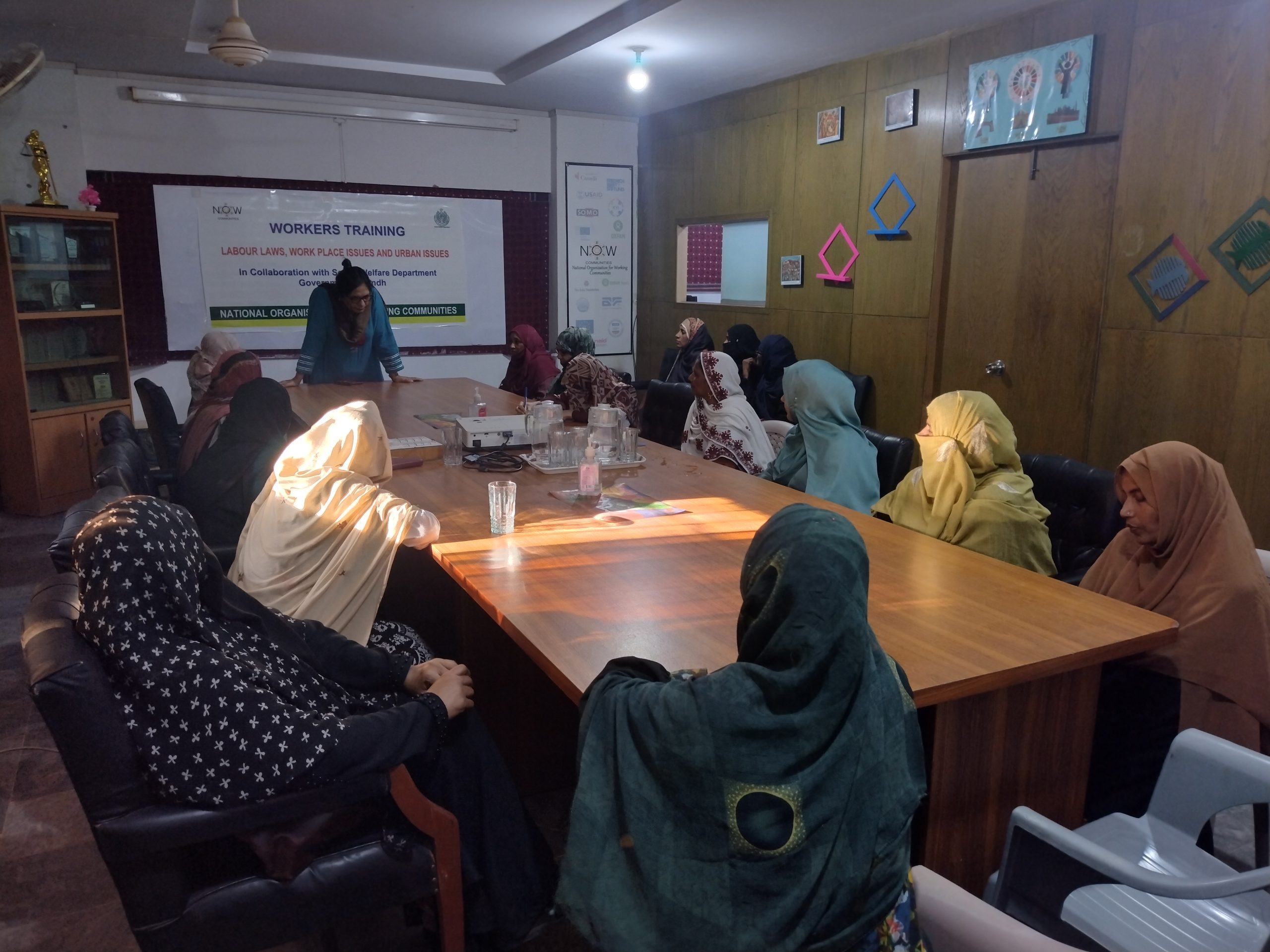
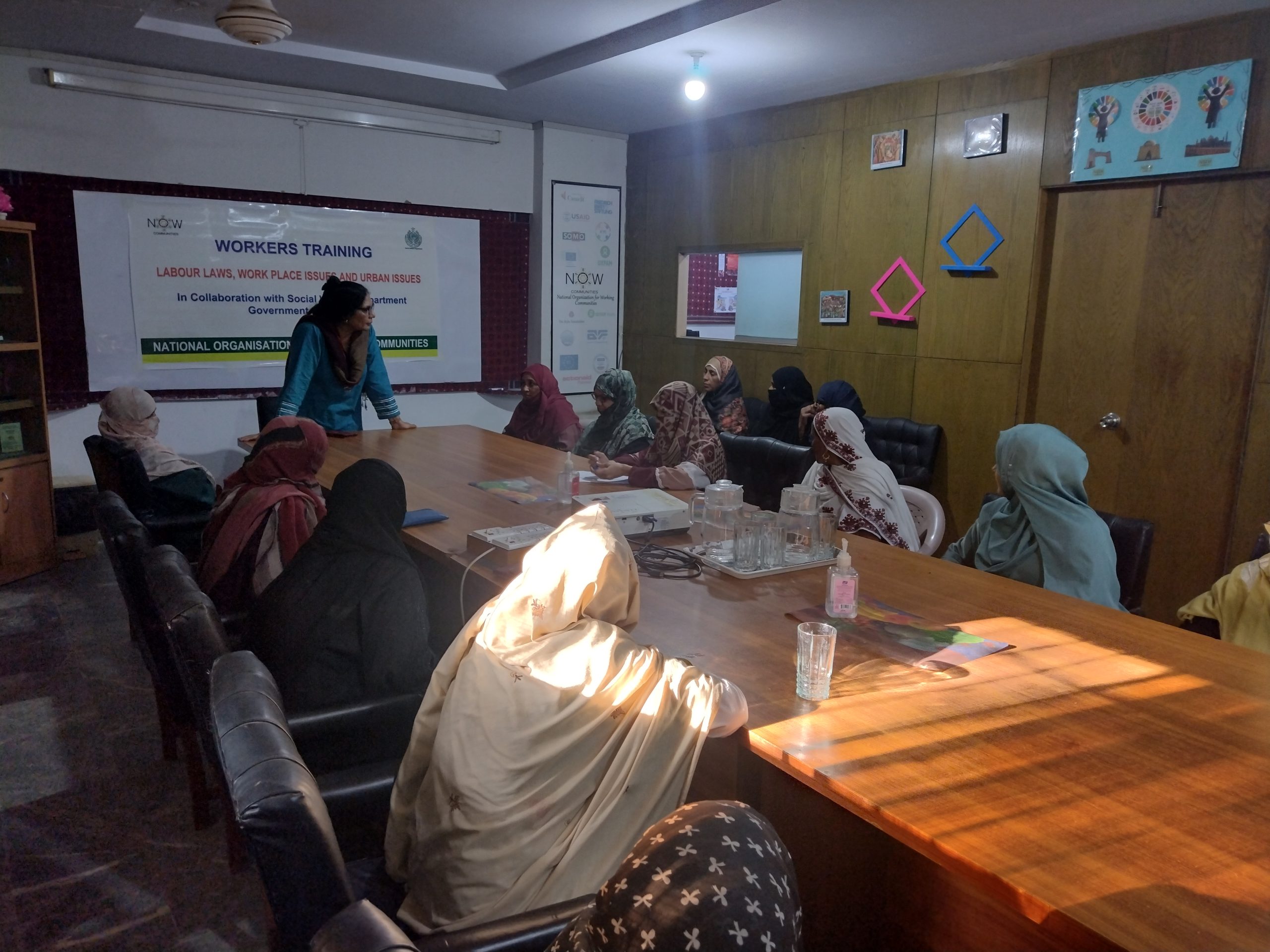
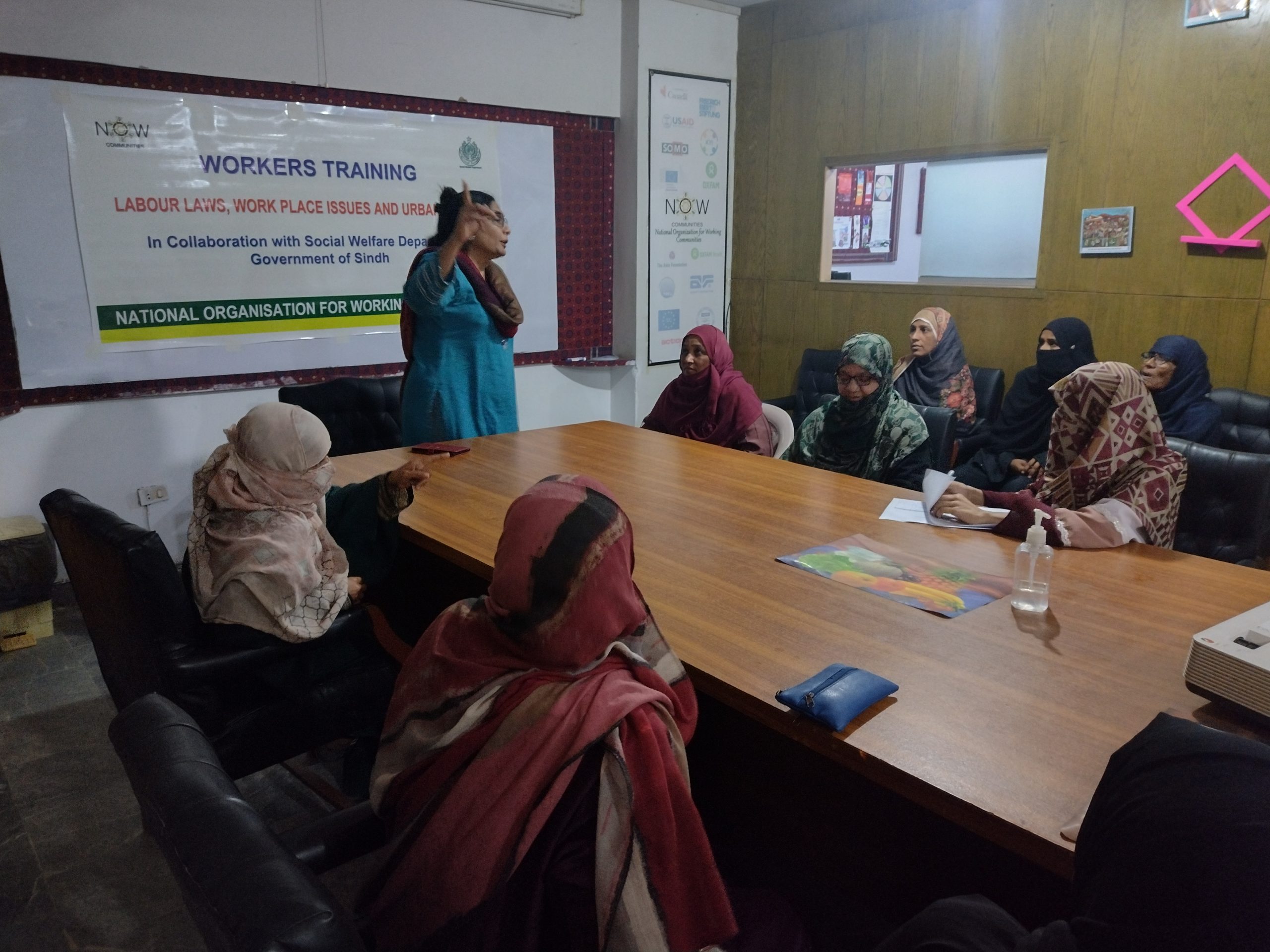
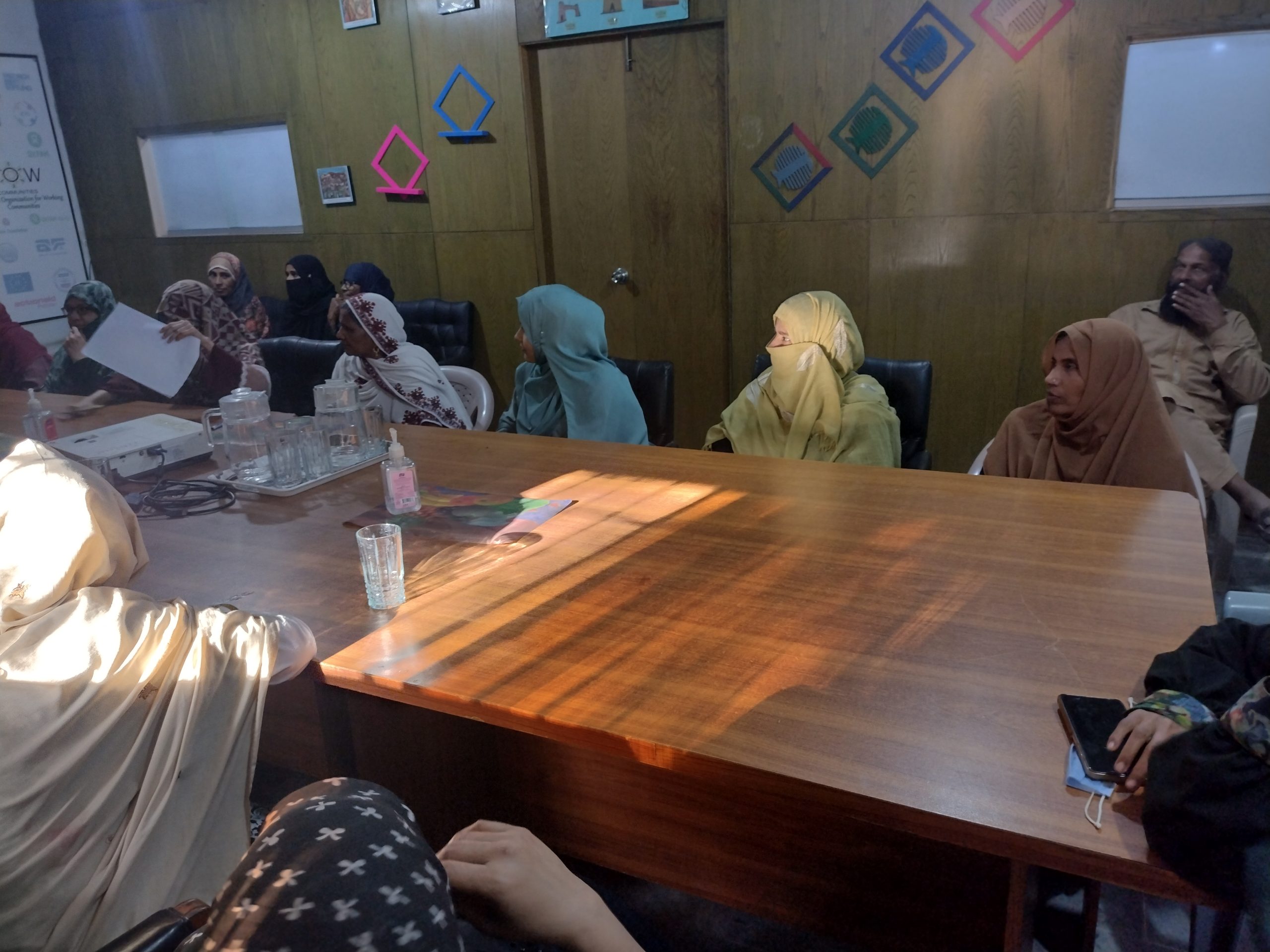
On 16 February 2026, an important training session was organized by NOWCommunities at its office for home-based workers. A number of women home-based workers from Korangi participated in the session. The main theme of the training was “Challenges Faced by Home-Based Workers and Unionization” along with “Urban Issues Faced by the Community.”
The Executive Director of NOWCommunities, Ms. Farhat Parveen, provided detailed guidance to the participants on addressing their challenges, organizing collectively, and understanding legal rights.
During the session, participants shared their concerns and highlighted the following key issues:
During the training, participants were informed that the effective solution to these issues lies in unity and collective organization. Emphasis was placed on the need for home-based workers to come together under a strong union platform. Furthermore, awareness of labor laws was highlighted as essential for the protection of their rights, and relevant legal provisions were also shared with the participants.
Participants were also guided on mechanisms to address urban community issues, enabling them to play an active role at the local level. NOWCommunities aims to form groups of educated youth, workers, and women in the community and provide them with the necessary training so that they can effectively address and resolve issues within their own communities.
About
The commitment of National Organization for Working Communities (NOWCommunities) was founded in 2007 – though it was formally registered with the Sindh Government in January 2008.
Social Links
Menu Links
Newsletter
We may send you Invitations, Introductions and Information about Our Events which will be Interesting for you to join Our Network.
Copyright © 2024 Now Communities. All Rights Reserved