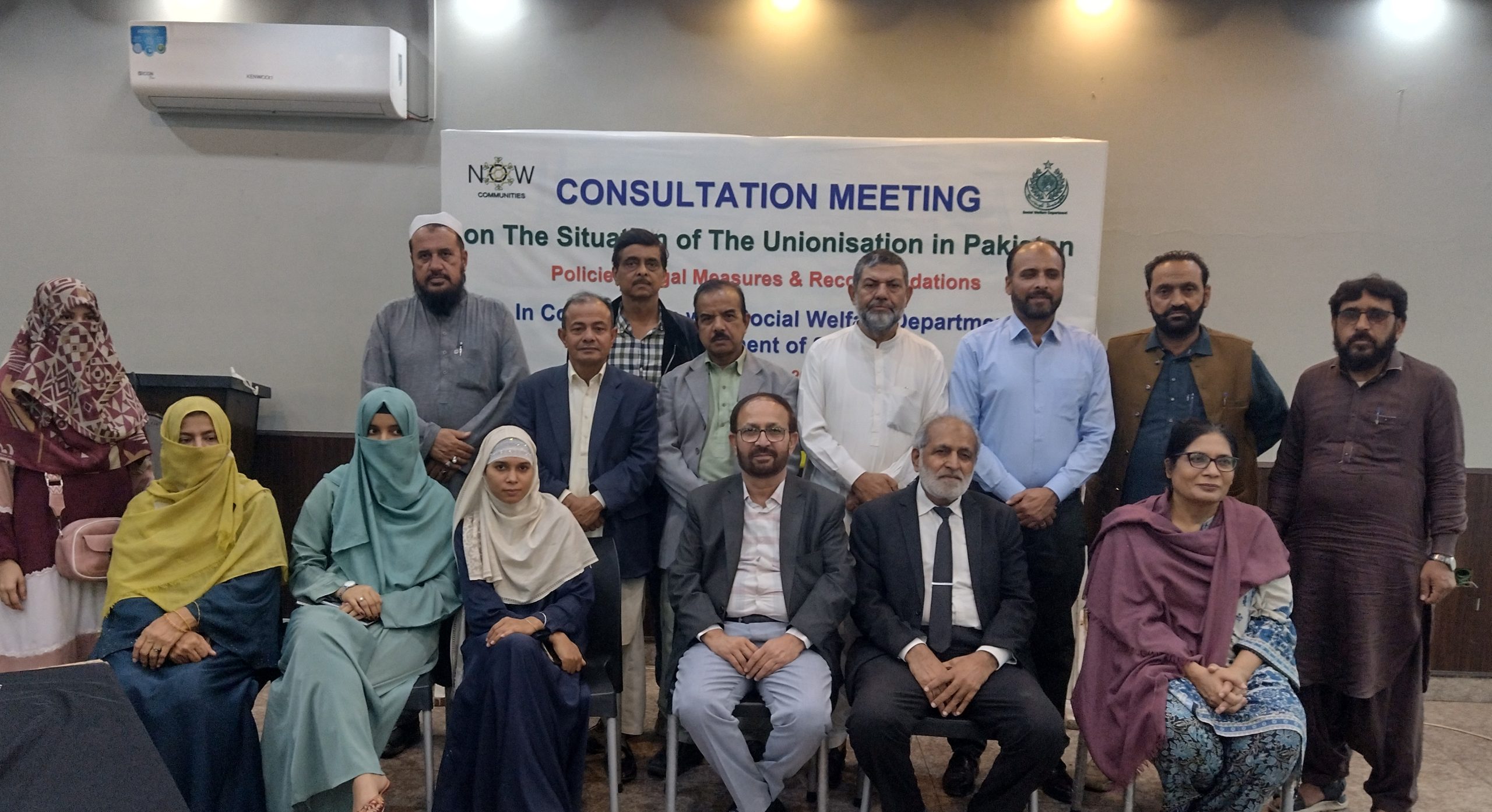
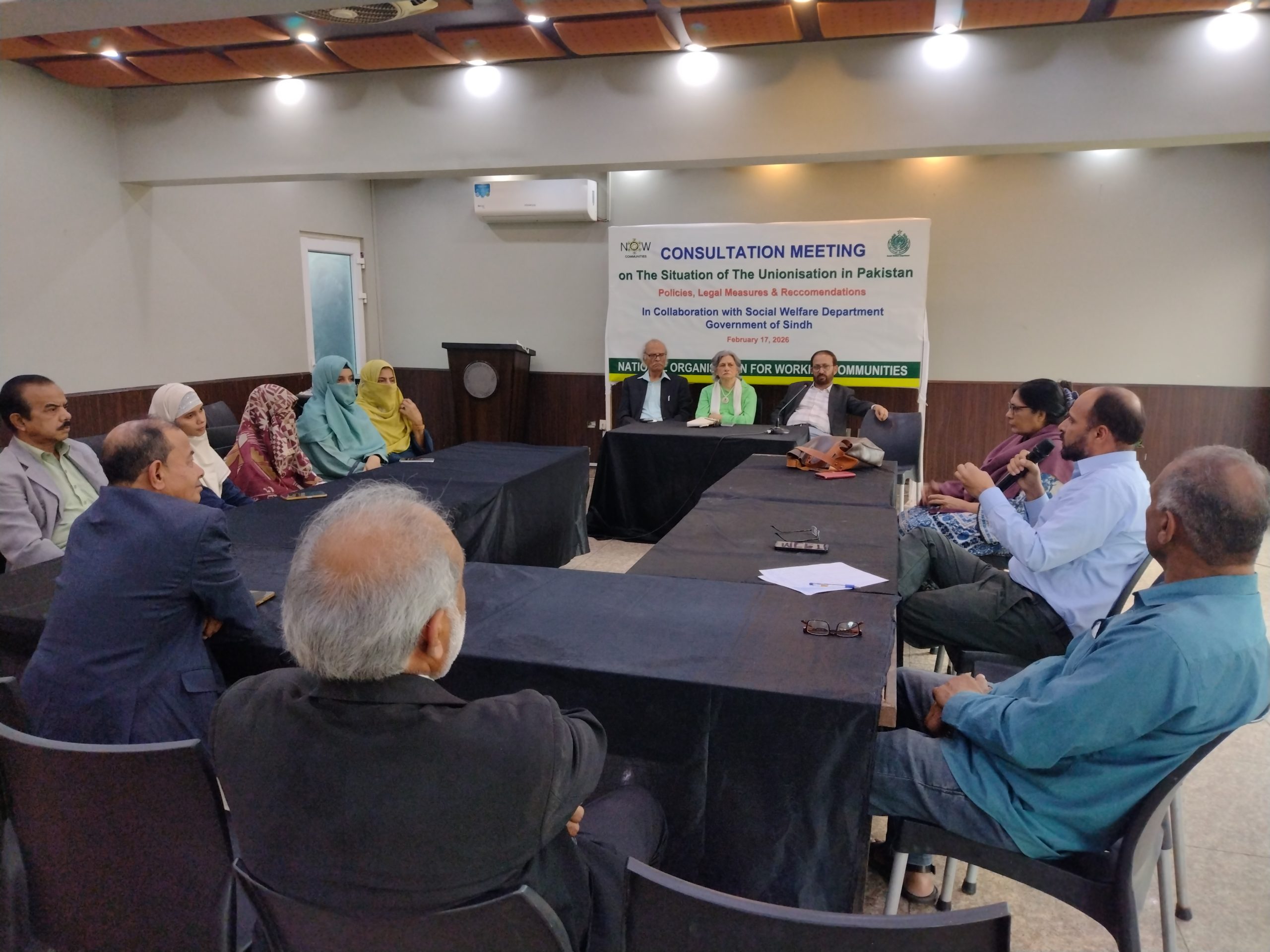
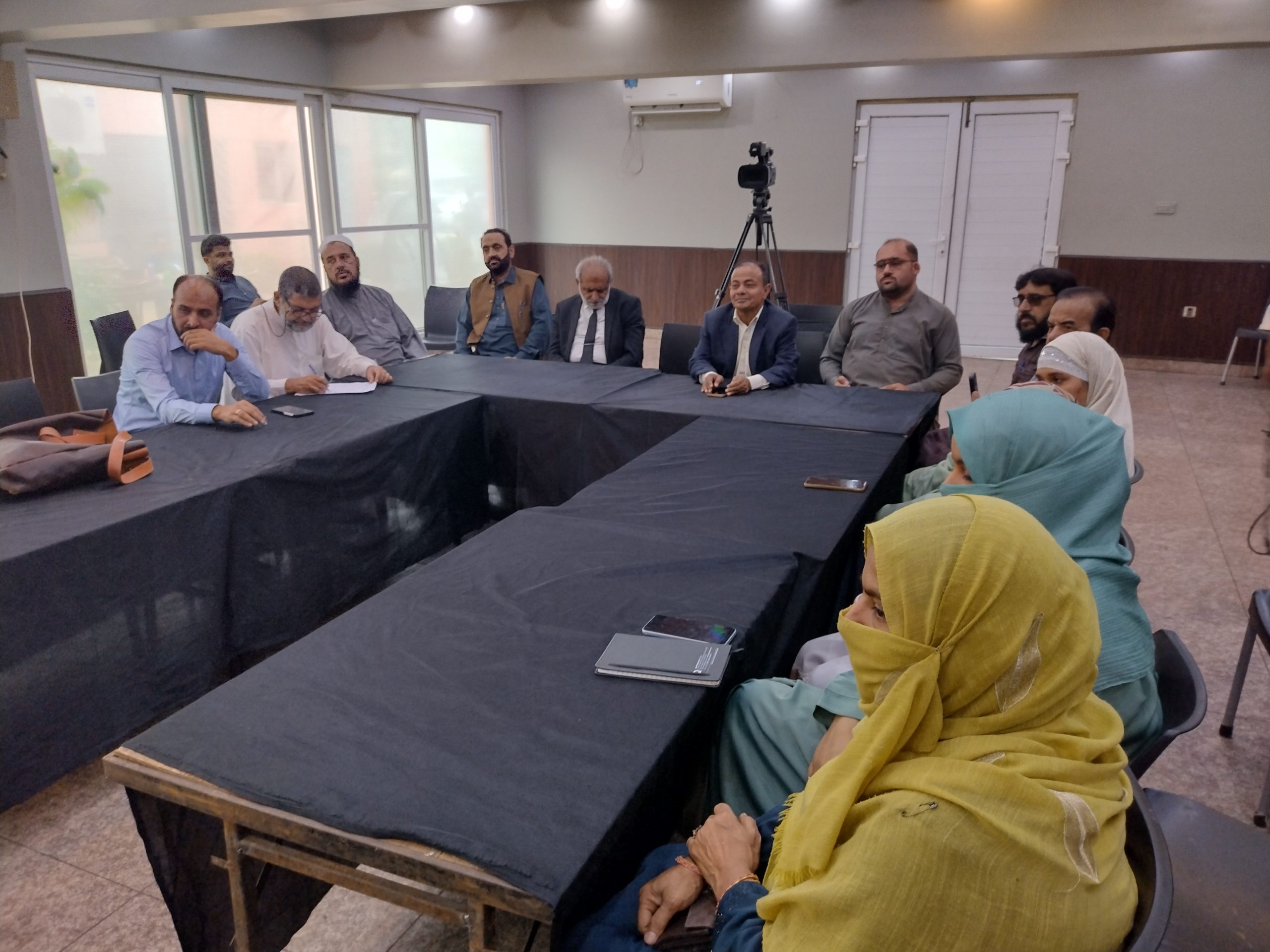
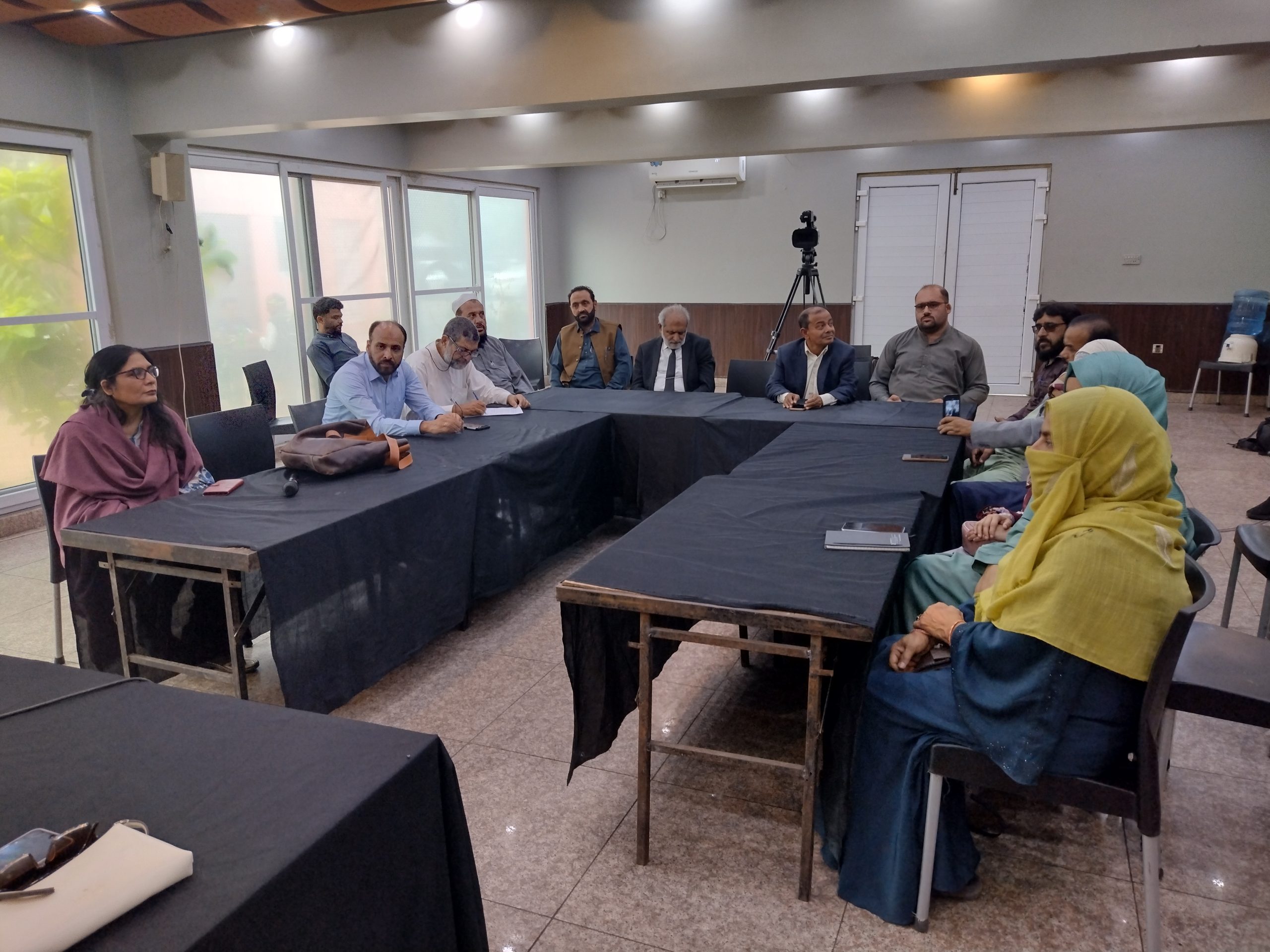
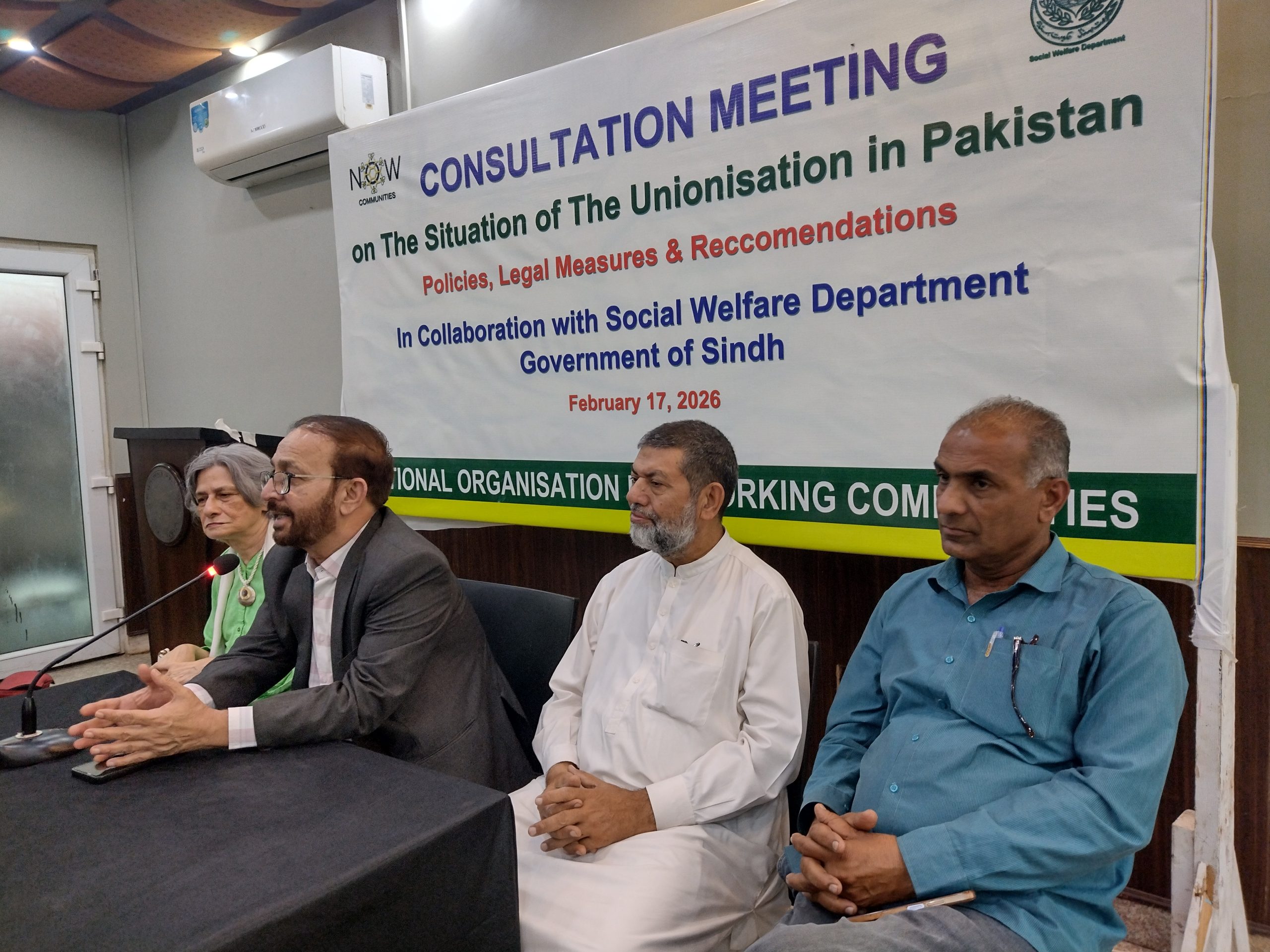
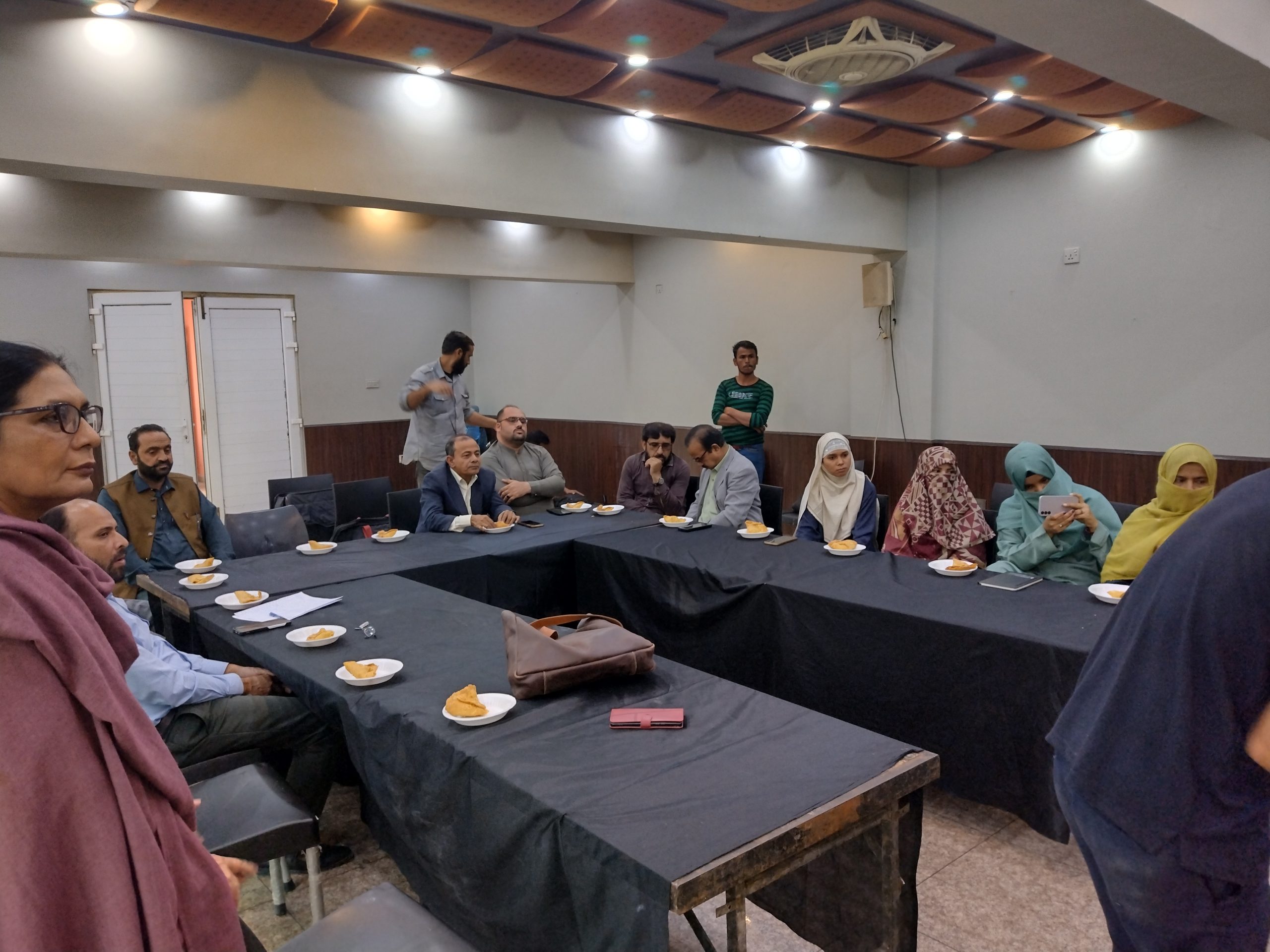
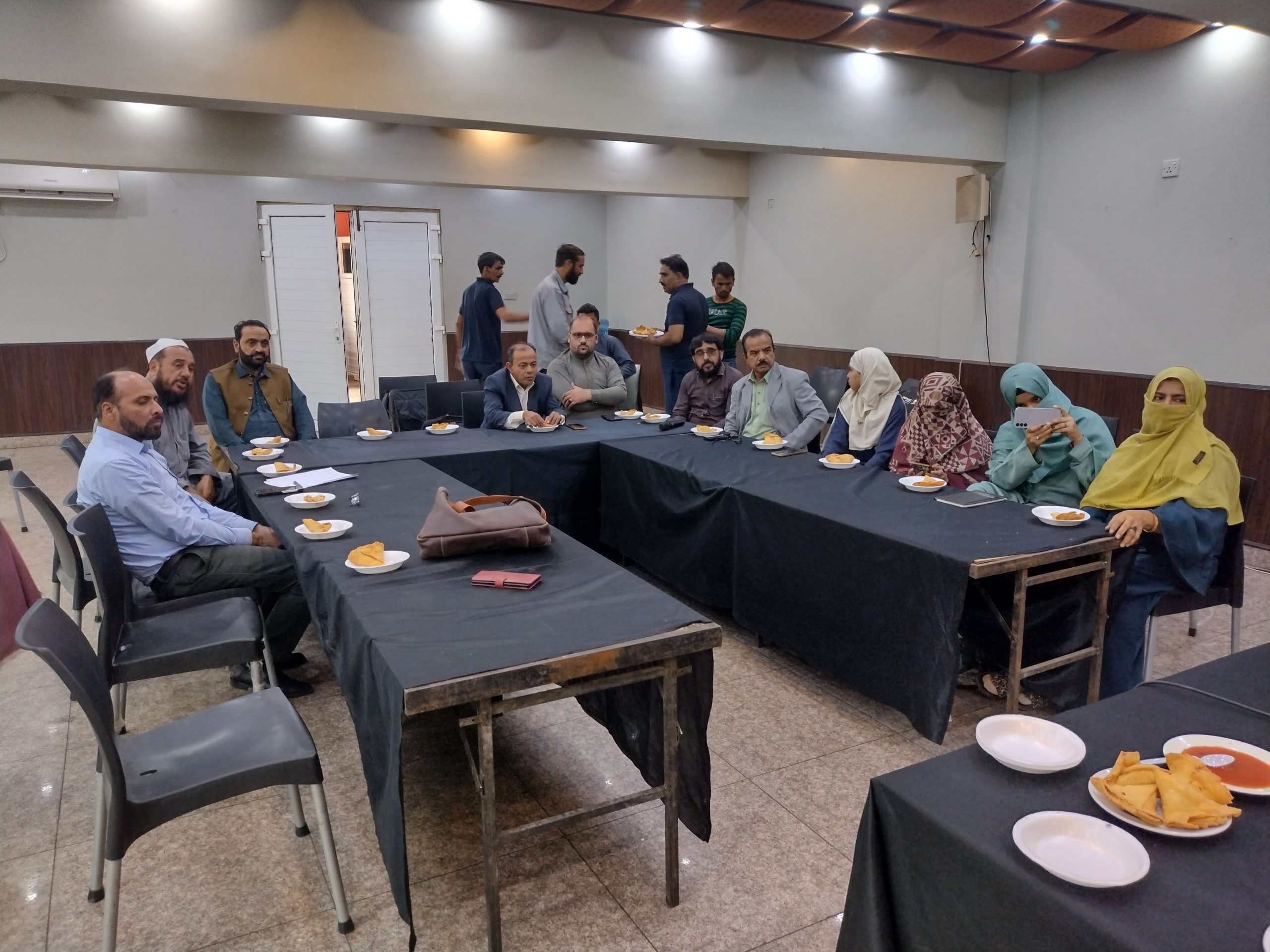
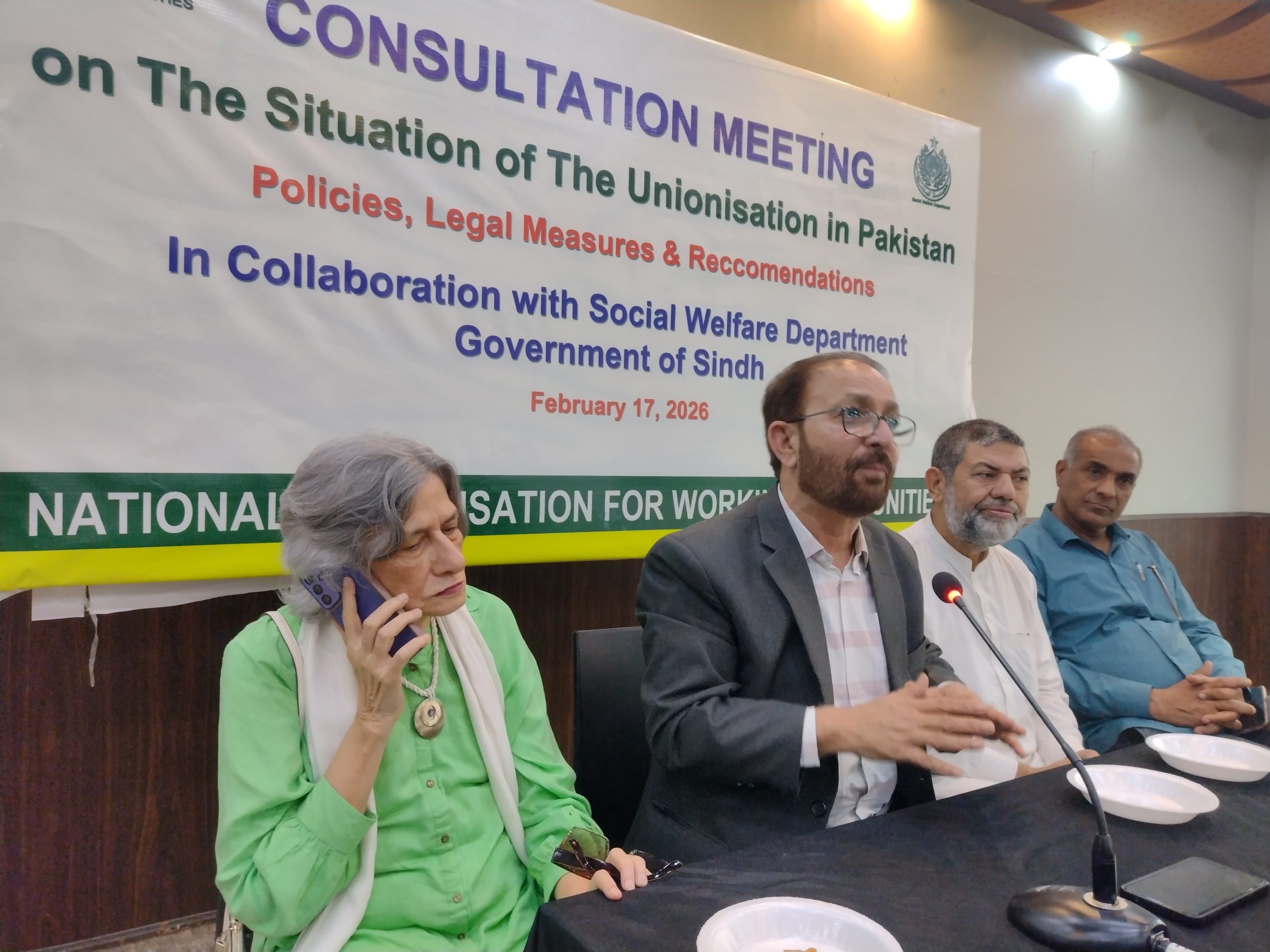
The current situation of trade unions in Pakistan appears fragile and concerning in many respects. In the past, the labour movement was a strong and influential force; however, today its effectiveness has diminished due to various legal, economic, and administrative barriers.
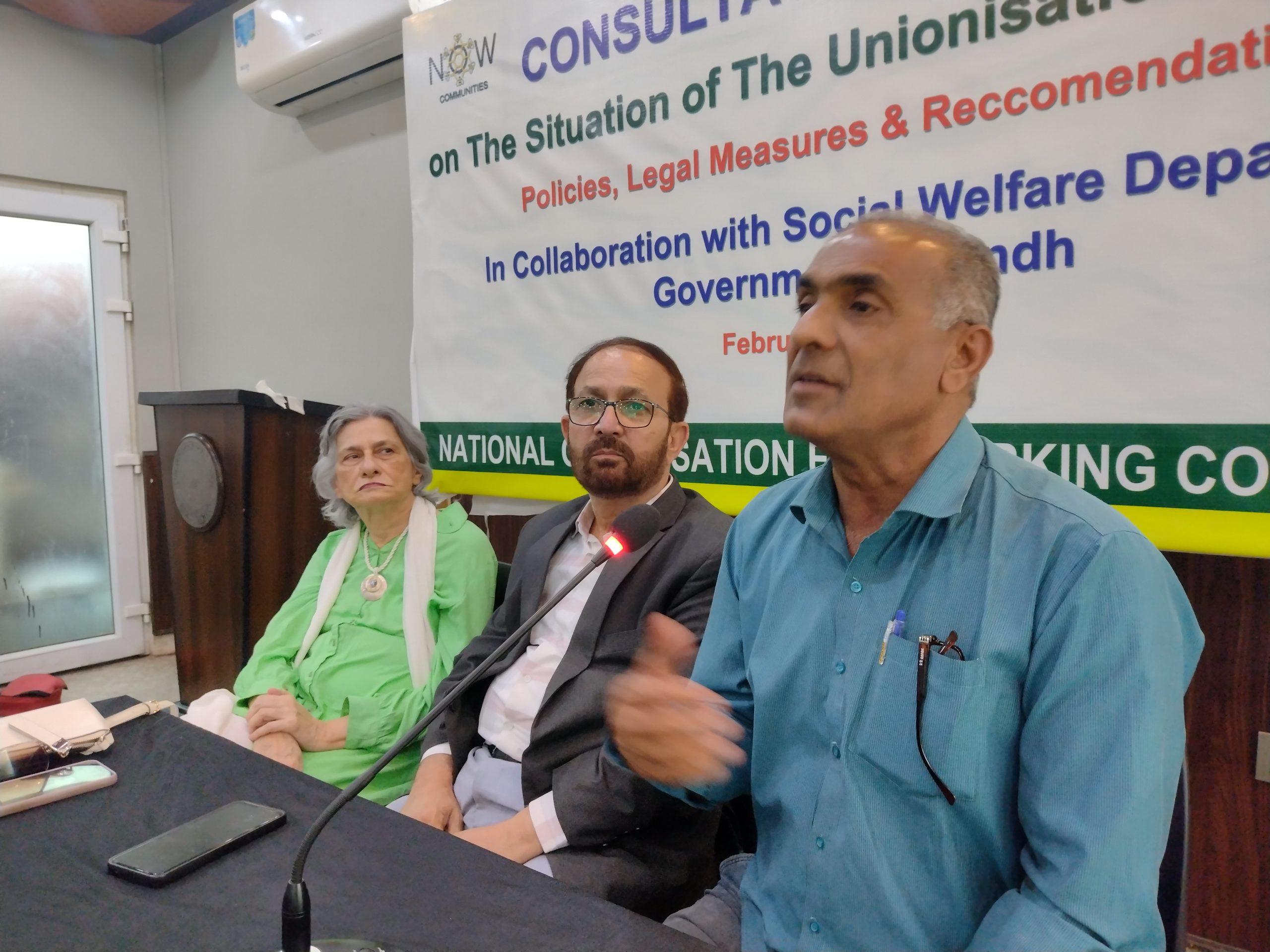
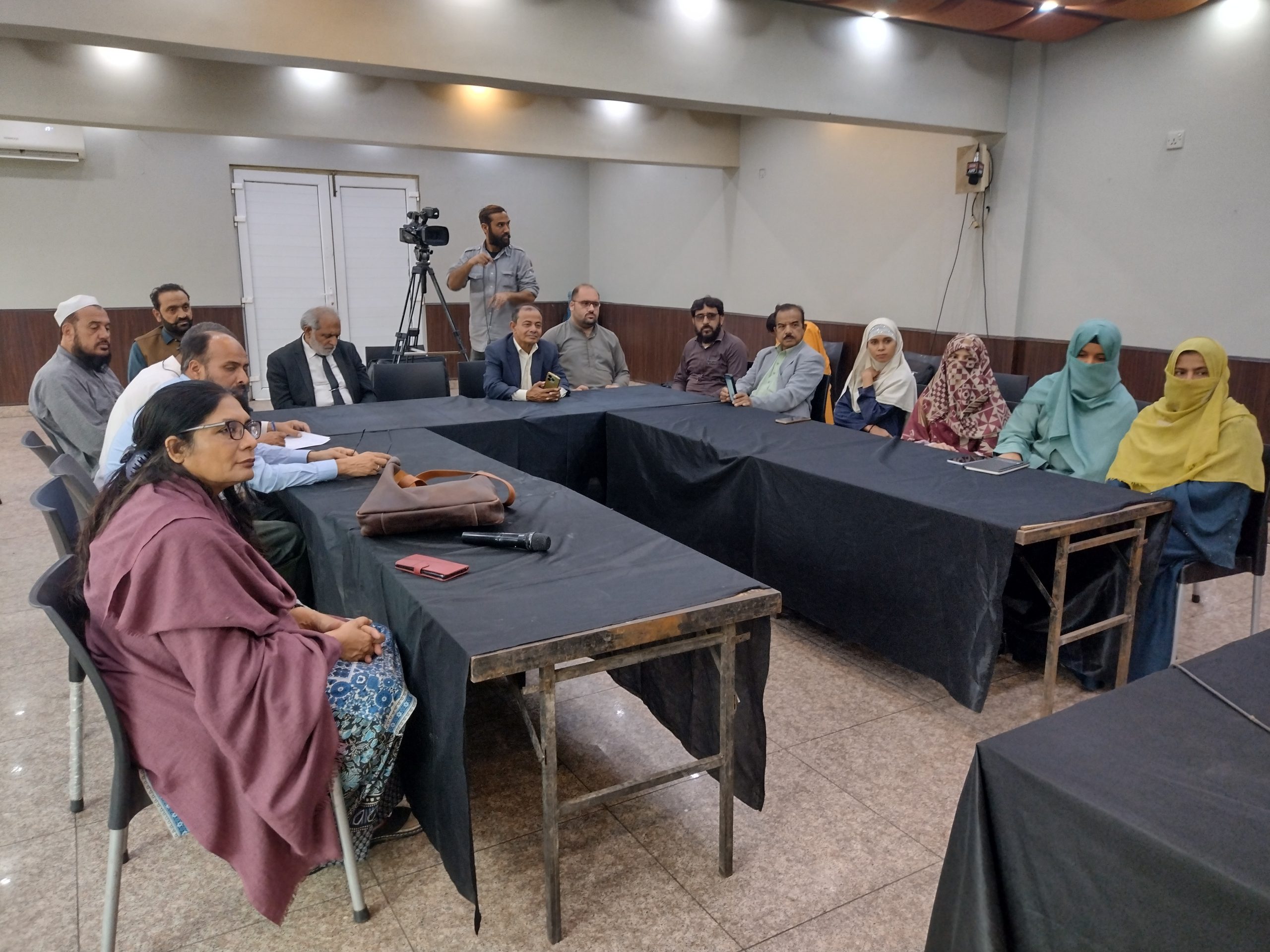
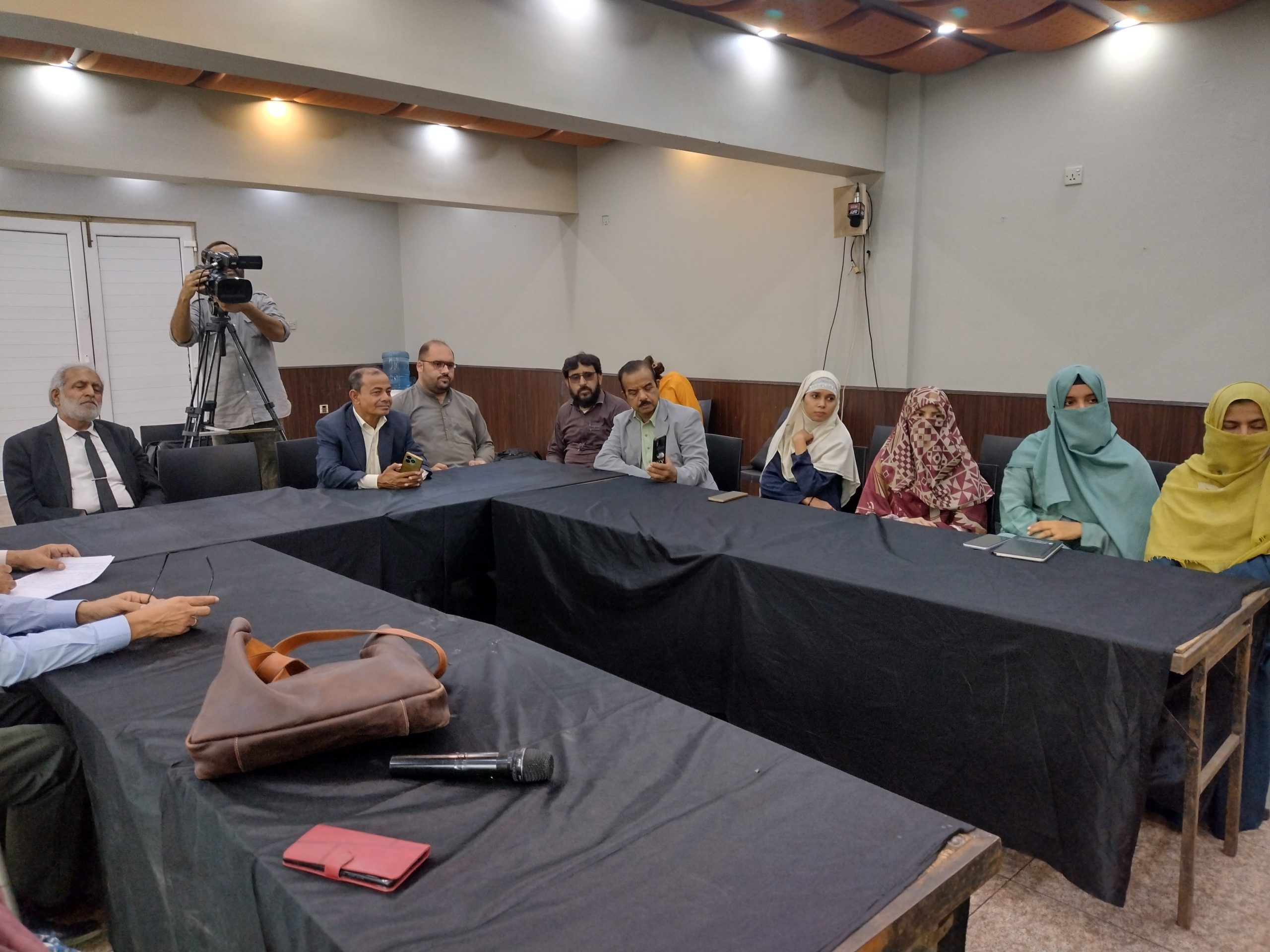
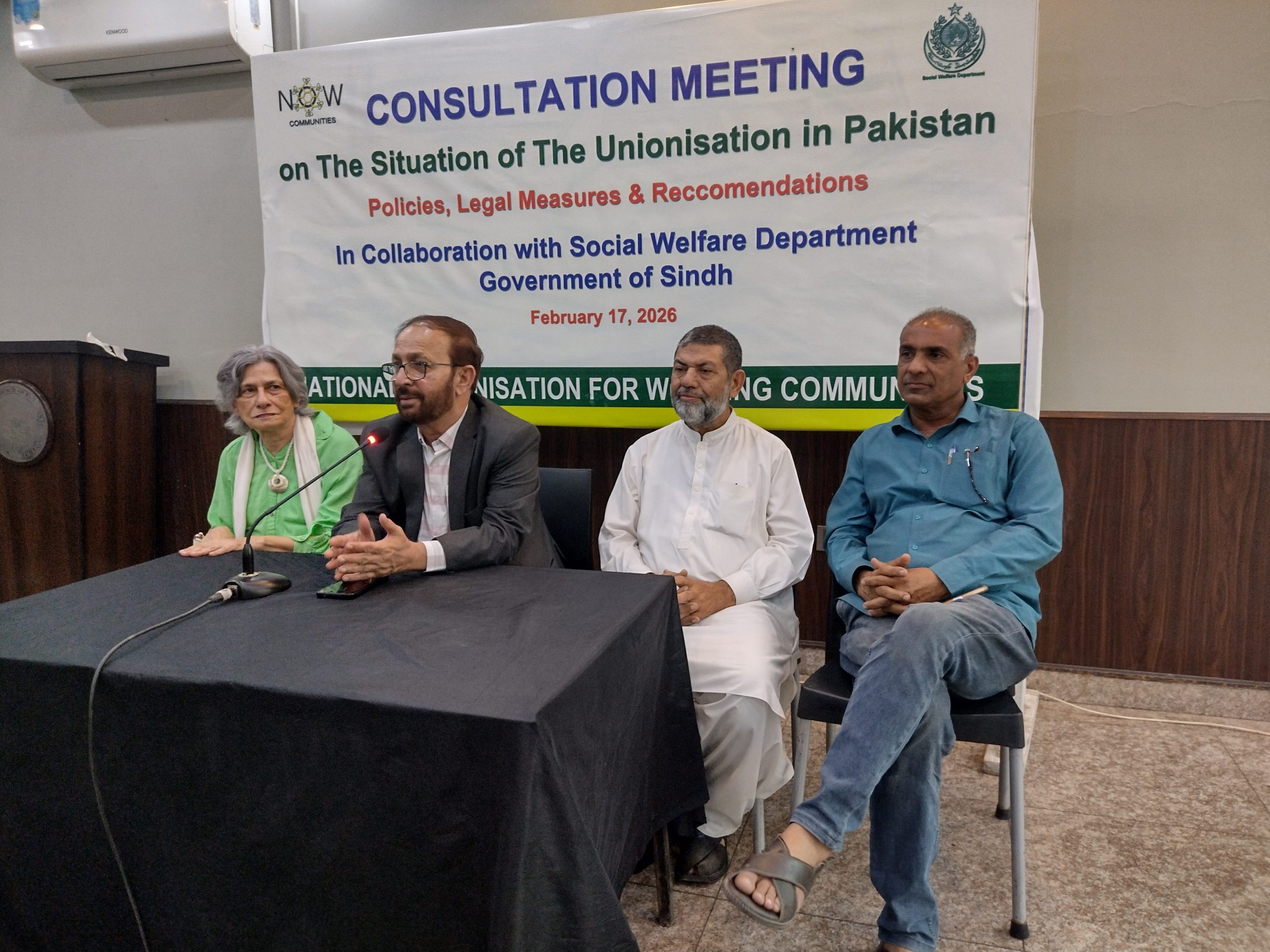
In this context, NOW Communities organized a seminar on 17 February 2026 at Gul Rang Hall, Arts Council of Pakistan Karachi. Prominent trade unionists from across Pakistan participated in the event, including Mr. Habibuddin Junaidi (President, Peoples Labour Bureau Sindh), Ms. Mehnaz Rehman (President, NOW Communities), Mr. Athar Shah (Joint Director, Shops and Establishment), Mr. Saeed Baloch (General Secretary, Pakistan Fisherfolk Forum), Mr. Bilawal Tanoli (Advocate), Mr. Zahid Ali (Advocate), Mr. Hussain Badshah, Mr. Zubair Ahmed, Mr. Iqbal Ansari, Ms. Shehnaz Syed, and Mr. Muhammad Shafi. The session was moderated by Ms. Farhat Parveen, Executive Director of NOW Communities.
During the seminar, the participants highlighted the following key points:
The labour leaders also pointed out the following challenges:
In conclusion, the participants proposed the following recommendations:
If these issues are addressed with seriousness, trade unions can once again become a strong voice for workers, not only protecting their rights but also promoting economic justice.
About
The commitment of National Organization for Working Communities (NOWCommunities) was founded in 2007 – though it was formally registered with the Sindh Government in January 2008.
Social Links
Menu Links
Newsletter
We may send you Invitations, Introductions and Information about Our Events which will be Interesting for you to join Our Network.
Copyright © 2024 Now Communities. All Rights Reserved